Ever wondered what news would look like if it was just for you?
A Next Generation “For You” tab that introduces a personalized news experience which adapts to the format, pace, and context of the reader. It enables discovery and control while reinforcing the Times’ editorial voice and integrity.
Dynamic reading modes aligned with the reader context and attention
Interest-based filters shaping your feed that balance relevance
Adaptive article length based on user-selected time constraints
Voice prompt-driven discovery for surfacing relevant articles and quick updates
I designed the Onboarding to give readers agency to shape the “For You” tab’s behavior.
An immediate pop up, allows readers to intentionally choose how they engage, selecting content type, depth, and time commitment before reading.
We mapped news experiences to counteract the silos created by personalization.
In a high-choice media culture, readers increasingly rely on personal relevance to navigate information without becoming overwhelmed.
1
Audience
Preference shift in formats based on speed and synthesis based on the user
2
Content
Users want “Related but New” feeds- they seek relevance and surprise while navigating news platforms
3
News form
Delivering digestible content while conserving the tone and context through user-controllable multimedia formats
4
Integrity
Reinforcing editorial voice through specific use cases like Cooking, Games, The Daily, The Athletic, etc.
Author Importance
Long-form articles, explainers, and investigative journalism with clear attribution and emphasis on editorial integrity
Use of AI
Used to extend accessibility and suggestions (location, history, and interests), but limited to help feel the experience is intentionally sectioned
Language and Media
Not a Mega App, it is editorially curated, and not algorithmically driven
Non-News Zones
Wordle, Spelling Bee, and Cooking drive daily return habits and outperform time-spent per session

Fragmentation and polarization lower satisfaction and weaken trust, undermining the credibility of traditional news media.

No preview into the format of the content except the title and description
No clear filtering for the content type
Lack of options to explore during the journey

Lack of visual cues or illustrations to quickly understand a topic
No onboarding or visual hierarchy
Discovery is difficult due to the layout

Landing page logic is unclear. Is it trending, personalized, or random?
Feels static and hard to explore
Just “one article at a time.”

Little user control over visible topics or genre filters
Categorization logic isn’t transparent or adjustable

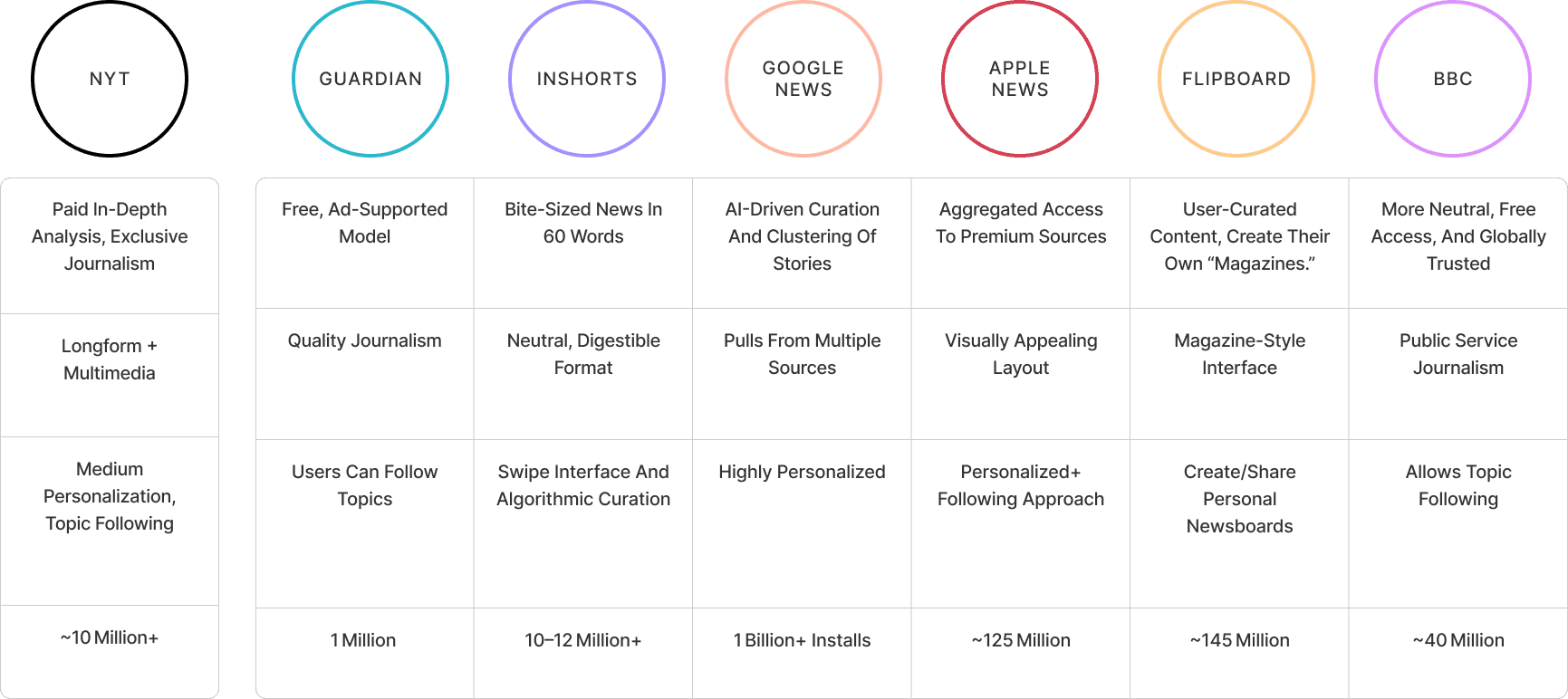
High level Vision
Users get articles that are consumable by them to ensure users spend more time with the content.
User & Business
Increase engagement across the entire NYT platform, not just within isolated content zones
Planning
Implement a recommendation engine that follows the editorial standards
How might we help users navigate news that is catered to their availability, surroundings, and emotional state without compromising the essence and depth of journalism?

IDEATION


SCENARIOS
1
Intent focus: Mood and mode based filters
“I want to sit back and check out some relaxing, fun picks”

This choice signals intent and cognitive state before the system ever generates content
Each mode represents a system state, not just a filter

2
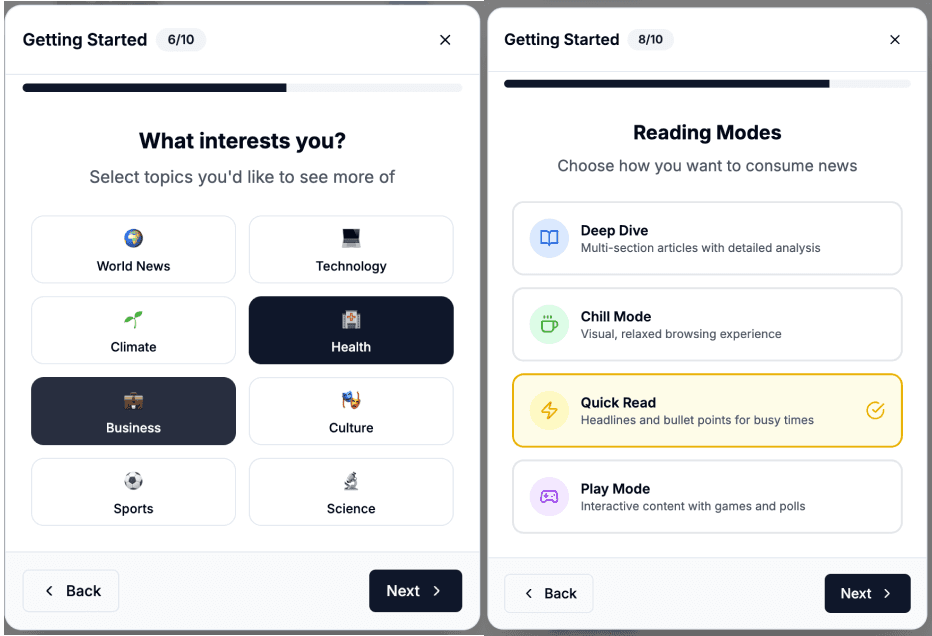
Onboarding and Prompting
“What is the You Tab?”

3
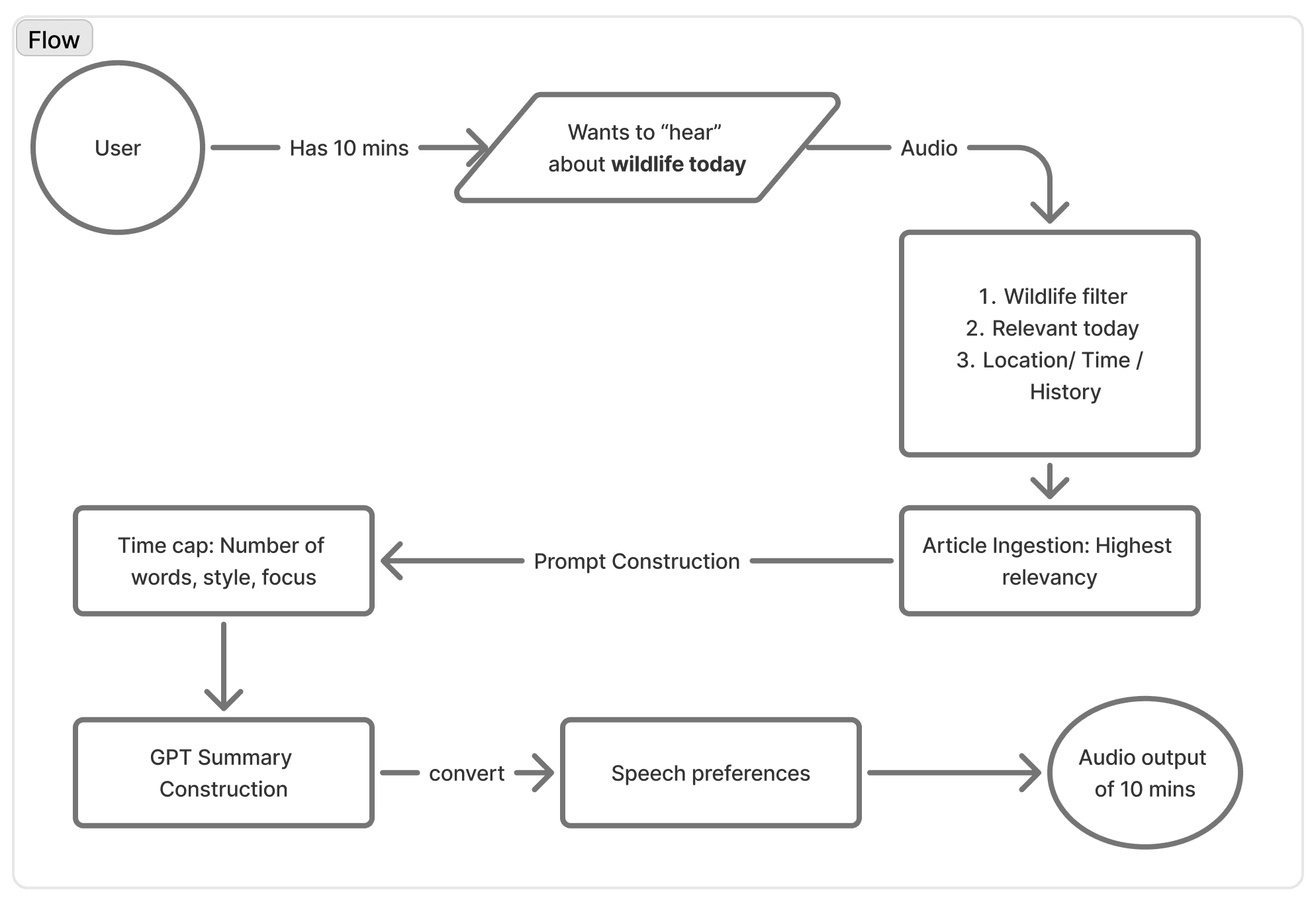
AI voice prompting and summarization
“I have 10 minutes and I want to know about some wildlife highlights today”
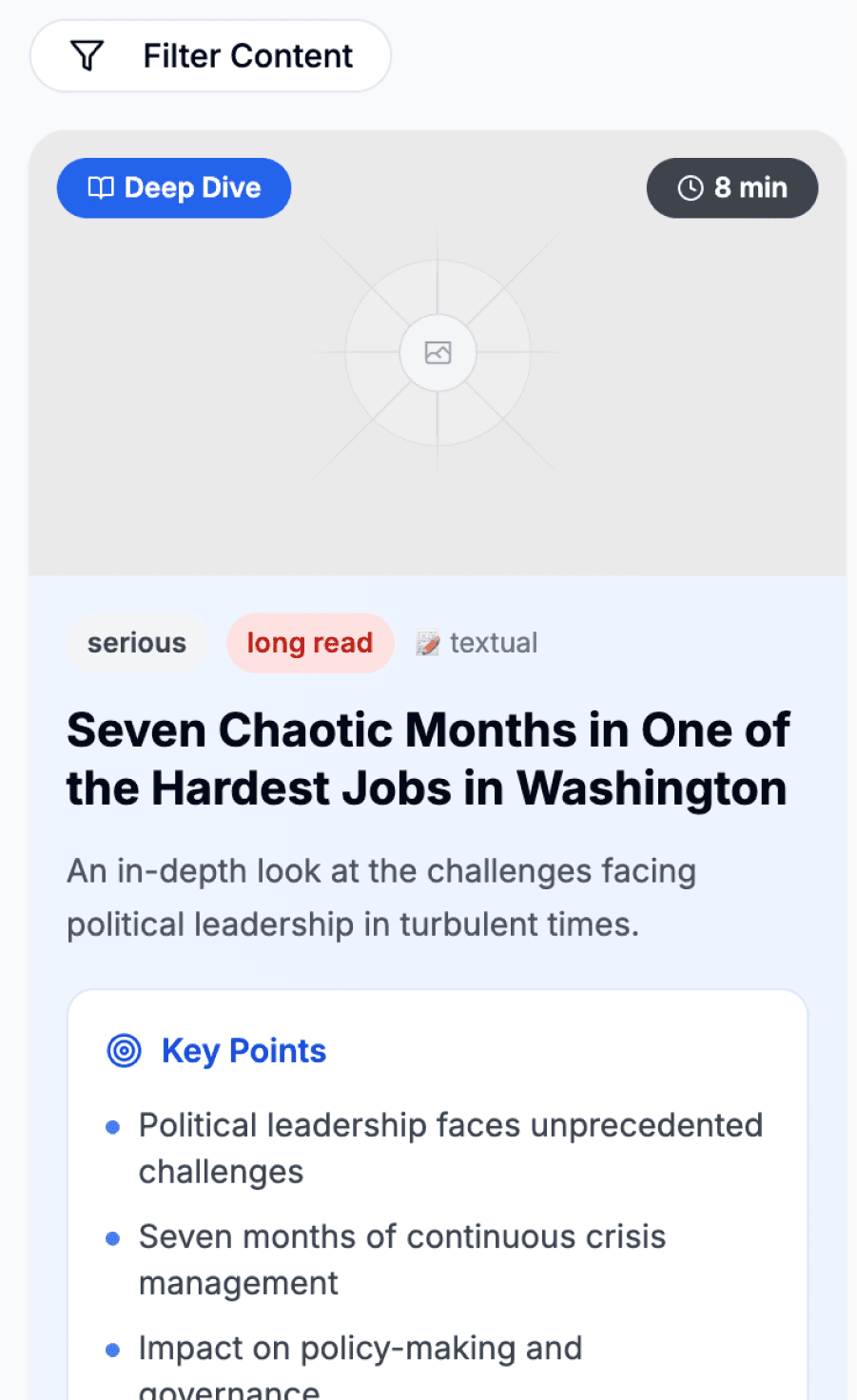
4
Multimedia Exploration
“I am taking a break from work and want to get a glimpse of this saved audio piece within 5 mins as I scroll through other stories.”

This scenario explores how we designed AI-assisted multimedia exploration for moments of low attention, without breaking context or control.

Objective
We don’t aggressively personalize
Users communicate naturally
We do not lose them at the preview of features
AI systems need to adapt to user intent
No loss of cognitive state
Feature
GPT Summary within Journalism Boundaries
Text to Speech (TTS)
No popups for onboarding
Dynamic content feed generation
Microinteractions: emotive UI
How and where AI would play its role?

DELIVERABLE
We landed on 5 main features that decreased clutter but increased agency of the user.
Overview

Modes
Constrains
Retain references and the content
Integrate User patterns with respect to history, location and preferences set initially
User understands the navigation and has the flexibility to change it
Voice Prompting
Define articles based on your time
LEARNINGS
Future Changes